We All Stim
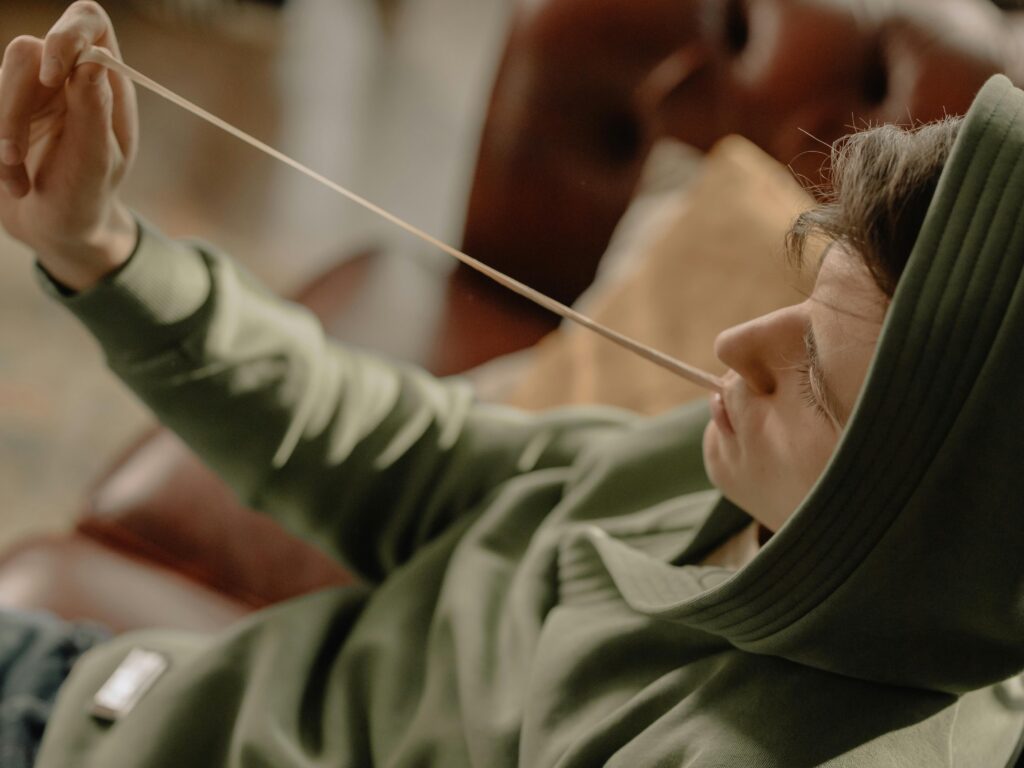
If you’ve heard the words “stim” or “stimming,” it was probably in reference to autism, and often with concern. Parents are frequently told their child’s hand-flapping, rocking, humming, or repeating words is something that needs to be reduced or eliminated.
What many people do not know, however, is that every human being stims. Including you! Stimming isn’t a behavior problem. It’s a nervous system regulation strategy. Your child isn’t doing something “wrong.” Your child is doing something human.
Define That
“Stimming” is short for “self-stimulatory behavior.” In other words, it’s the brain and body working together to manage sensory input, emotions, and attention. It can be used to calm oneself, focus, release energy, process feelings, and even tolerate overwhelming environments.
You may think, for example, that a child loudly vocalizing in a busy, crowded, loud restaurant is expressing distress. They might be. They could alternatively be emitting these vocalizations to regulate their emotions, like anxiety or fear, and sensations, like audiovisual input.
“Well I don’t do that,” you might think. Fair. But what you might do is bounce your leg for the minutes leading up to your presentation at work, or click a pen while talking on the phone, or bite your nails absentmindedly while watching TV. Can you think of an instance where you do something for seemingly no reason at all, especially during moments of stress, boredom, or physical discomfort (tired, uncomfortable, restless, etc.)?
Neurodivergent Stimming and Neurotypical Stimming: A Non-Exhaustive List
In autistic or other neurodivergent individuals, when excited, overwhelmed, concentrating, or trying to recover from stress, you may see:
- hand flapping or clapping
- rocking
- spinning
- pacing
- humming or vocalizing
- repeating words or phrases, often from videos, commercials, and songs (scripting)
- lining up toys and other items
- watching objects closely, sometimes staring at small parts (like wheels spinning) and/or watching through the corners of their eyes
- tapping or banging surfaces
- covering ears
- squeezing eyes shut
In neurotypical adults and children, you still see stimming all the time, it just isn’t frequently labeled or attended to:
- tapping a pencil
- shaking a leg
- twirling hair
- cracking knuckles
- chewing gum
- pacing during a phone call
- doodling during meetings
- listening to the same song repeatedly
- squeezing a stress ball
- bouncing a baby while thinking
Why are some of these forms sometimes considered a problem and the others aren’t? Unfortunately, much of this comes down to what individuals and institutions, like schools, offices, and other community settings, deem socially appropriate versus “weird” or “bothersome.” I have seen firsthand harmless stims like jumping in place during peer play called disruptive to the other students, and a learner waving his hand in front of his face sometimes during breaks called a goal for ABA because it made others uncomfortable, because “normal kids don’t do that.” Sometimes, the concern is for how atypical stims may impact the learner’s socialization, for example if classmates make fun of them.
So What Do We Do?
Modern, ethical ABA does not treat stimming as a behavior problem by default. We only intervene when a behavior is unsafe (self-injury, hitting head, skin damage, etc.), when it is preventing participation in necessary activities (and even then, we try first and foremost to work with the stimming rather than repress it), or is causing significant distress, like when a learner him- or herself expresses being unable to control it, it making them physically uncomfortable, or otherwise wanting to find replacements.
You may have read our previous post on replacement behaviors. Even with stimming we may need to ethically intervene on, we can find safer alternatives rather than in any way punish or suppress self-stimulation. I, for example, tend to dig my fingernails into my fingertips without thinking much about it through the day. Using wire acupuncture/fidget rings, I can gain a similar sensory input without hurting myself or needing to subsequently keep my nails shorter than I like. I also chew at the inside of my mouth when working, watching TV, or driving–lower sensory input activities–and have found chewing gum to be a useful alternative that, again, keeps me safe.
Removing a stim without replacing the regulation it provides is like taking away someone’s coping skill. Imagine someone forcing you to sit perfectly still when anxious, not pace while thinking, or not take deep breaths when overwhelmed. You wouldn’t feel calmer–you would feel trapped, cornered, or like you’ve been left in a boat in the middle of the ocean with no paddle. In other words, negative feelings are more likely to skyrocket without a safe place to land. For many children, stimming is the reason they can stay in a classroom, grocery store, or family event at all.
For From the Nest Parents
At From the Nest, our goal is not compliance: it is building skills in regulation and communication.
Instead of asking, “How do we stop this?” we ask:
- What is the child’s nervous system telling us?
- Is the environment too overwhelming?
- Do they need a break?
- Do they need a different way to communicate?
- Can we teach safer or more functional alternatives if necessary?
Sometimes we teach how to request a break, add movement/motor-sensory opportunities, teach self-advocacy, and/or modify the environment. One of my favorite things to teach is how to recognize what your brain or body needs in the moment, sometimes using a visual “menu” that ties needs to solutions, so the learner can access that solution themselves or gain help from others in solving the challenge.
Other times: we simply allow it. Because sometimes the correct intervention is acceptance.
Your child is not stimming instead of learning. Your child may be stimming so they can learn. Stimming is not a sign that therapy is failing. Often, it is a sign that a child is coping, and doing so independently. That is a win!
Our job in ethical ABA is not to make children appear neurotypical. Our job is to help them feel safe, understood, and able to participate in their world while still being themselves.
When we understand stimming, we stop asking, “How do we stop it?” We start asking, “How do we support them?” And that shift changes everything—for children and for families.
by Britt Bolton, founder & clinical director (BCBA)
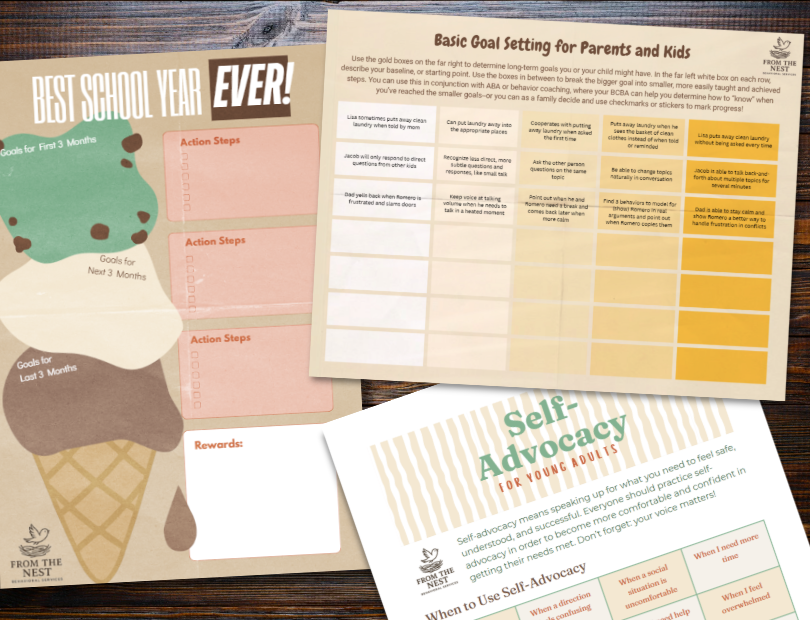
Look at our FREE Printable Resources page for routine visual supports, checklists, goal-setting worksheets, teen and young adult guides to jobs and self-advocacy, and more!