The RBT Experience, Part 2
You carry it with you
“I thought it was more like hanging out with the kids.”
If you’ve already checked out Part 1, “Welcome to ABA,” about the hiring and training experiences of the former and current behavior technicians I’ve had the privilege to interview for this series, you might remember that this was one former RBT’s expectation of the job based upon her interview. This same RBT hadn’t even been told anything about the behavior therapy aspect of ABA–how learner may engage in unsafe behaviors like hitting, kicking, self-injury, elopement (running off), throwing items (including large furniture), break items, biting, headbutting, and more. Like many new techs, she would soon find herself startled by the severity of some of these behaviors, lacking confidence in what she was supposed to do, and lacking the task-related and emotional support she needed.
For many technicians, RBT burnout in ABA starts long before they ever leave the field. And as my interviewees shared unanimously, whether they had positive, negative, or a mix of experiences in ABA, this job sticks with you.
“When they’re telling you to restrain a child, that really messes with you.“
My interviewees were able to share intense situations they witnessed or were directly a part of. For example, one described two clients who at times required multiple staff in order to protect the learner, the technicians, and the other children around them. Both clients had unclear triggers, or patterns of causes for their aggression toward others, leaving even the BCBAs unsure how to best protect everyone. Multiple staff had been sent for emergency services or had chunks of tissue bitten out of them before they could adequately utilize the physical management techniques they had been trained on. Even when physical restraints were used, with several staff working diligently to maintain safety.
None of this was surprising to me. In fact, I have experienced some of the same in my time in ABA, and I have the physical scars to prove it. What was somewhat more surprising than these reports was how frequently my interviewees touched upon the emotional impact of these situations.
I agree wholeheartedly: it isn’t easy to restrain a child, and it should not only be the very last resort in order to prevent harm, but should impact those who implement it. But, with the frequent outcry online against ABA, as well as general condemnation of physical management, I felt relieved to hear that the technicians involved in some of these situations were not indifferent or of the mindset of “that’s just how the job is.” They often felt sad, scared, and confused–and not a single one of my interviewees mentioned any form of debriefing following these events or even a check-in from a supervisor. There was no described reassessment of whether another intervention may be less risky or intrusive, no discussions of whether the learner could more safely be served elsewhere, no rationale of why going hands-on, even with its many risks, was perceived to be the best option. That doesn’t mean these things didn’t happen, only that they did not leave as lasting an impression on these technicians, and that should be meaningful data.
I remember absorbing a few cases upon starting at a new center once where every behavior intervention plan (BIP, or the document outlining how to both set up the learner for success/reduce the likelihood of unsafe behaviors and how to respond if these behaviors occur) included a form of physical management, like physical restraints (holds), transports (physically moving the learner elsewhere forcefully), and/or forced compliance under the guise of physical prompting. While I do recognize that there may be situations where physical management may be necessary–because, like it or not, in a severely threatening situation where injuries or even death are imminent, I would prefer properly implemented hands-on procedures with appropriate psychological supports for all parties than an underreaction–there continues to be misuse, particularly in centers, but that’s a blog post for another day…
Another point raised by my interviewees was this aforementioned lack of supports, extending to breaks. In many states, breaks, paid or unpaid, continue to not be legally enforceable. Medical billing regulations mean that breaks longer than just a few minutes necessitate having to end billing, which companies are not exactly “game” for, as that is lost revenue and reduced utilization of requested service hours. Working one-on-one with learner further complicates things, as, whether the only tech providing services in a home or a tech in an understaffed center, flagging someone down for even a bathroom break can be challenging. Being able to step away following a situation of being “beat up,” as one interviewee put it, often isn’t an option unless a supervisor offers to step in…and, unfortunately, that is not as common as one may hope.
That being said, one interviewee described feeling a strong sense of responsibility to power through, including skipping scheduled time off and offers to go home for the day based upon scheduling needs. She felt she needed to be present as much as possible for her learners’ progress and admitted to feeling a lack of confidence in her fellow techs. She said that, when possible, she tried to find out who would cover her clients in her absence, and if the RBT wasn’t someone consistent and compassionate, she would choose to postpone self-care, breaks, and other responsibilities outside of work.
Another interviewee, who identified coworkers as the hardest part of her time as an RBT, explained that she would sometimes become really frustrated when the other RBTs around her did not seem to care as much for the kids or doing their job well. These same RBTs who did care very much for the job often were paired with some of the most challenging clients out of necessity (as you can’t exactly put someone unreliable or reactive or lazy on a high-needs learner without losing the staff or the family), which further pushed these higher quality RBTs to their limits.
“I feel like I do carry some trauma…I worry about a kid trying to bite me, even when they are trying to whisper a secret to me, show me kindness, or even [to get] my attention.”
Not everything these former and current behavior technicians carry with them is an emotional or physical scar. Across interviewees, I heard the same sentiment: that the joy of working with these learners and seeing them succeed doesn’t erase the pain, but does soothe it.
One summed it up well when she said, “What I love about the job is seeing my clients progress and seeing how excited my clients get when they accomplish something.” She described jumping for joy the first time one of her learners spoke her name, something she had been working with them on for “a long time.” She loved the funny things her learners would sometimes say, the same way a mother might excitedly post online about the cute thing their child said. To parents, she said, she would say, “Your kiddos are not paychecks to the good RBT’s. [They] are an extension of our own families and a source of pride.”
I’m excited to dive more into the positives later in this series–I promise it’s coming!
In the meantime, our next post will explore the caregiver support aspect of being a behavior technician. While many in the field think of BCBAs as the main source of parent training and general family interactions, I would argue that, in many cases, BCBAs are sadly often the least involved position in an ABA company–yes, even compared with “back office” or operations staff–with parents. We don’t often explore the parts of working with parents that are challenging for RBTs or the experiences with or insights into whole family support that they gain by working one-on-one with learners.
by Britt Bolton, BCBA
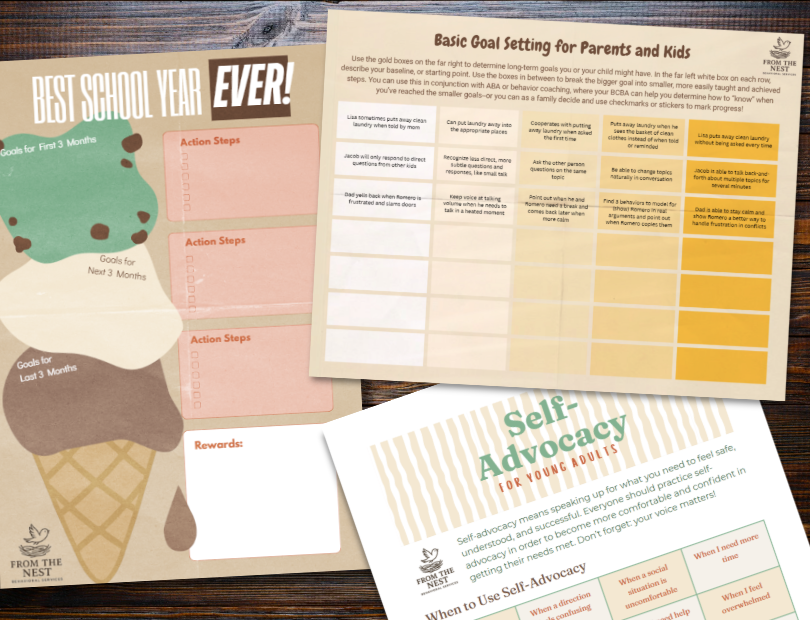
Look at our FREE Printable Resources page for routine visual supports, checklists, goal-setting worksheets, teen and young adult guides to jobs and self-advocacy, and more!