
Transitions Made Easier
If you’re a parent, you know that transitions, or the moments when your child has to switch from one activity to another, can sometimes feel like one of those spy movies where they’re trying to avoid the red lasers. One minute, your child’s happily building a marble track or immersed in a screen, and the next, the whole household’s on high alert as your child screams, runs away, throws things, hits… What happened in between: you asked them to stop and come to dinner.
For many kids, transitions aren’t just mildly inconvenient. They can trigger big emotions, meltdowns, or resistance. But there’s good news: with a few intentional strategies, you can make these shifts smoother and less stressful—for your child and for you.
The Struggle is Real…
Transitions require kids to shift attention, regulate emotions, and sometimes inhibit impulses. The problem is, these are all skills that are still developing in childhood. This is especially true for kids with sensory sensitivities, ADHD, or other neurodiverse traits. This isn’t just a matter of being asked to do something we don’t want to do and being stubborn; this is an issue of missing the skills that can make this less scary, frustrating, or overwhelming. As adults, we can also have a hard time pausing things sometimes, keeping it together, and prioritizing the less fun or more difficult things first–we’ve just had more practice, more connection with reinforcement for doing so, and more brain development!
…But We Can Help
When a child is “in the zone,” asking them to stop can feel abrupt, confusing, or even unfair. Recognizing this is the first step toward creating calmer, more cooperative transitions. Here’s some things you can try at home that have been proven to work, even without the guidance of a BCBA. The key is consistency, so if at first things don’t go 100% ideally, stick with it–your child will learn what the expectations are, will feel more secure in the predictability, and learn how to adapt quickly.
#1. Give a Heads Up
Most kids (people in general!) do better when they know ahead of time that something less preferred is about to happen. The same goes for kids and transitions. Instead of saying, “Time to clean up!” try giving a countdown: “In five minutes, we’ll start cleaning up.”
Some families use timers, visual cues, or songs to mark the end of an activity, but be ready for some kids to see this as a warning sign and try to take off into the next room!
#2. Offer Choices & Control
Kids almost always love to feel independent and like their voice matters. So it makes sense that transitions feel smoother when kids have a sense of agency. You could ask, “Do you want to brush your teeth first or put on pajamas first?” Even small choices can reduce pushback.
I’ve had some parent push back that giving kids control and choices makes them kids who think they get their way all the time. On the contrary, being given a say-so in the smaller, less necessary parts decreases motivation to take control of the bigger, more necessary parts. If you can give up control over whether to put on the blue jammies or the pink jammies, and this gets your child more excited for and cooperative with putting on the night clothes they need to put on, why not?
#3. Make It Predictable
Routines create a sense of safety. If bedtime always follows a 10-minute reading session or a warm bubble bath, kids know what to expect and can mentally prepare. Visual schedules or picture cards work wonders for younger kids, and especially if your child is neurodiverse, the routine can feel more comforting than restrictive.
#4. It’s Okay to Acknowledge Feelings!
Don’t listen to anyone who may tell you (and trust me, they will) that empathizing with and labeling a child’s feelings coddles them or gets them more upset. Feeling seen often softens resistance. Think about a work situation where you felt like your supervisor or coworker just did not “get” what you were saying or trying to do. How did your willingness to cooperate, to compromise, and to maintain rapport with that person compare to a situation where a supervisor/coworker made you feel valued and respected?
Sometimes kids resist transitions because they’re frustrated or disappointed. Naming it can help: “I see you’re really enjoying your game. I know it’s hard to stop. We’ll come back to it tomorrow.”
#5. Include Movement or Sensory Breaks
I’m going to throw in a preliminary “Not an Occupational Therapist” before getting into motor-sensory needs. I am a big one on staying within my scope or role as a BCBA, and I know my understanding of sensory input or regulation is not nearly as developed as that of OTs. But what I do know is reinforcement, and for many kids, physical activity is motivating!
Adding a brief wiggle, stretch, or sensory activity between transitions can distract your child from the bummer parts of transitioning, as well as make the transition itself more motivating because it becomes more fun. Even try crawling, jumping like a frog, or walking backwards to get to where you’re going!
#6. Keep Your Expectations Realistic
Even with preparation, transitions may still be tricky. Part of that is because, again, this is developmentally appropriate to an extent. We want to keep building on skills, to avoid skill regression, and to avoid a child being unwilling to make any transitions or engaging in unsafe behaviors when they have to transition between activities. But these things take time to grow, and that’s okay. Celebrate small wins and be patient with setbacks. Your calm presence is the most powerful tool you have.
Trigger Learning, Not “Losing It”
Transitions don’t have to be a battleground. With gentle preparation, clear communication, and empathy, these moments can become opportunities for growth, connection, and learning. Every child is different, so experiment with strategies, notice what works, and adjust as needed.
Remember: teaching your child to navigate change is a gift they carry for life…and a calmer, happier home is a pretty nice bonus too!
by Britt Bolton, owner/lead BCBA
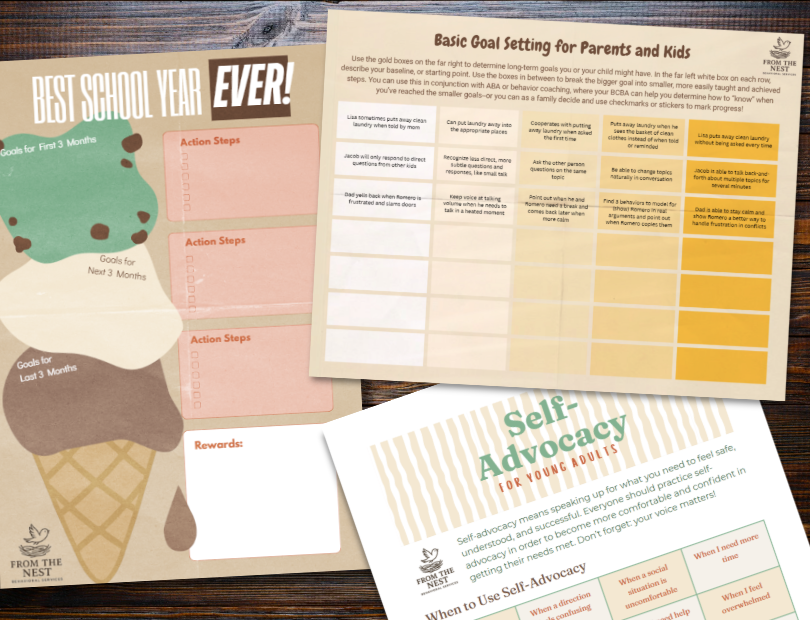
Look at our FREE Printable Resources page for routine visual supports, checklists, goal-setting worksheets, teen and young adult guides to jobs and self-advocacy, and more!