Small Change, Big Reaction
She just wanted to be able to go on a last-minute grocery store run or stop by Grandma’s.
That was the first thing that came to a mom’s mind when we started discussing priorities for ABA. If it wasn’t enough to have errands to do after a long day of work, she alluded, sometimes she just couldn’t deal with an hour-long meltdown on top of it. As much as she tried to plan errands ahead of time, things come up, and this single working mom didn’t have many opportunities to tackle these things without her son in toe.
“I don’t get it. He doesn’t mind shopping–he’s always so good. And he loves Grandma’s house. I let him bring the tablet. I just don’t know what to do.”
Sometimes it’s not last-minute changes in plans. Sometimes it’s because your toddler got the blue cup instead of the green one. Sometimes it’s because the school bus had to take a different route home that afternoon. Sometimes it’s because the favorite chain restaurant updated their packaging, even though the food itself stayed the same.
To many neurotypical individuals, these situations seem insignificant. To many neurodivergent individuals, they can feel anything but.
Hint: It’s Not The Cup
When we look at these situations from the outside, it’s easy to assume the child is upset about the cup, the route, or the chair. More often, those things are simply the final piece in a much larger puzzle.
Many autistic and otherwise neurodivergent people thrive on predictability. Predictable routines reduce uncertainty, lower cognitive demands, and create a sense of safety. Every expectation your child has about what’s going to happen next allows them to spend less mental energy figuring out the world around them.
When that expectation suddenly changes (even in a way that, to you, seems trivial), it can feel like the rug has been pulled out from under them.
Imagine driving to work every day and suddenly finding your usual bridge closed without warning. You’d probably feel frustrated, maybe anxious, and have to quickly make a new plan. Now imagine experiencing that same disruption multiple times a day while also processing sensory information more intensely and having fewer tools for managing unexpected events.
That “little” change starts to feel much bigger.
Meltdown =/= Temper Tantrum
One of the biggest misconceptions about autism is that children melt down because they don’t get their way. Parents, grandparents, teachers, and other often conflate meltdowns with tantrums.
A tantrum is generally a goal-directed behavior: the child wants something and is attempting to obtain it.
A meltdown is different. A meltdown occurs when a person’s ability to cope has been exceeded. During a meltdown, the brain is in survival mode. Logical reasoning, negotiating, and lengthy explanations are often ineffective because the child is overwhelmed and has now hit their boiling-over point.
Historically in ABA, BCBAs have overused “tantrums” or even “refusal” or “noncompliance,” as the distinction can be difficult to identify using only observable, measurable traits and avoiding mentalistic thinking, or guessing at the feelings behind the behavior. But, whatever you call the behaviors, the distinction matters because it changes how we respond.
What Helps in the Moment
When your child is overwhelmed by an unexpected change, your first priority isn’t teaching flexibility. No one learns well when they’ve hit their metaphorical wall.
Instead, the goal is helping them feel safe enough for their nervous system to recover.
That might mean:
- Keeping your own voice calm and your language brief.
- Reducing sensory input when possible.
- Giving them time rather than rushing them through the emotion.
- Validating the experience without agreeing that the situation is dangerous.
Avoid minimizing through statements like, “Calm down” or “It’s not a big deal.” Instead try, “I know this wasn’t what you expected. That’s really hard.” You’re validating the emotion, not reinforcing that the change itself is catastrophic.
Parents sometimes worry that validating these feelings will make them worse. In reality, children learn best when they’re calm. If your long-term goal is flexibility, practice flexibility during moments of success, not during moments of overload.
Some ideas include:
- Introducing small, planned changes to familiar routines. For very routine-oriented children, try to keep routines from becoming too set and predictable in their details in order to avoid being “stuck” within these details. For example, such children can become very resistant to dad putting them to bed if mom is absolutely always in charge of bedtime, even when needed or when mom isn’t home.
- Giving advance warnings whenever possible.
- Using visual schedules.
- Offering choices when appropriate so your child experiences some control.
- Celebrating successful coping with unexpected changes, even if the success seems small.
Over time, these experiences build confidence that “I can handle things even when they don’t go as planned.”
Progress Isn’t Perfection
Even adults struggle with unexpected change. The goal isn’t to create a child who never becomes upset; the goal is to gradually expand their ability to recover, adapt, and feel safe in an unpredictable world. That process takes time. Every calm response from a caregiver, every successful recovery, and every thoughtfully supported challenge becomes another building block toward resilience.
Sometimes the smallest changes create the biggest reactions. But when we understand what’s happening beneath the surface, those moments become opportunities–not for punishment or power struggles, but for connection, learning, and growth.
If your child struggles with change, especially even if given advanced warning and you’ve been practicing the above with them, reach out to us at From the Nest. Even if our services aren’t the right fit for you and your child, we’re always willing to help identify helpful resources or other providers.
by Britt Bolton, BCBA
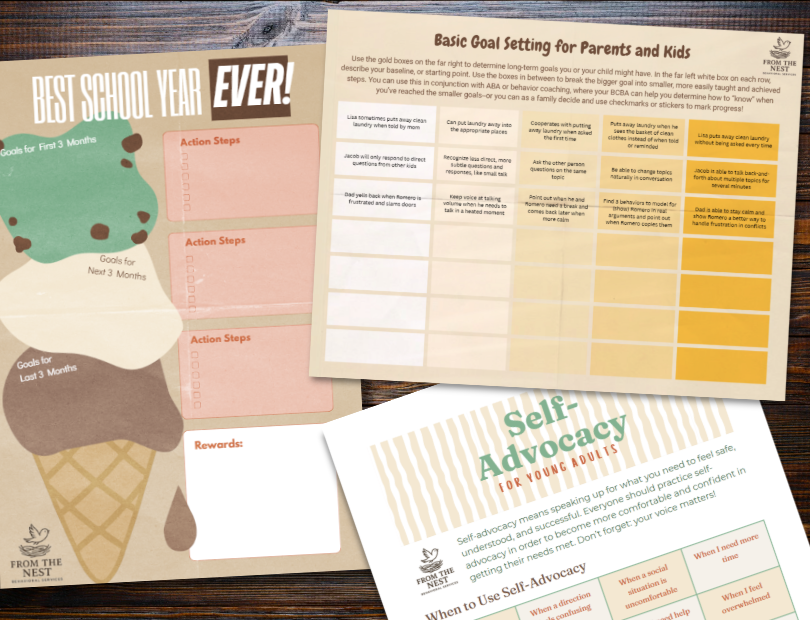
Look at our FREE Printable Resources page for routine visual supports, checklists, goal-setting worksheets, teen and young adult guides to jobs and self-advocacy, and more!